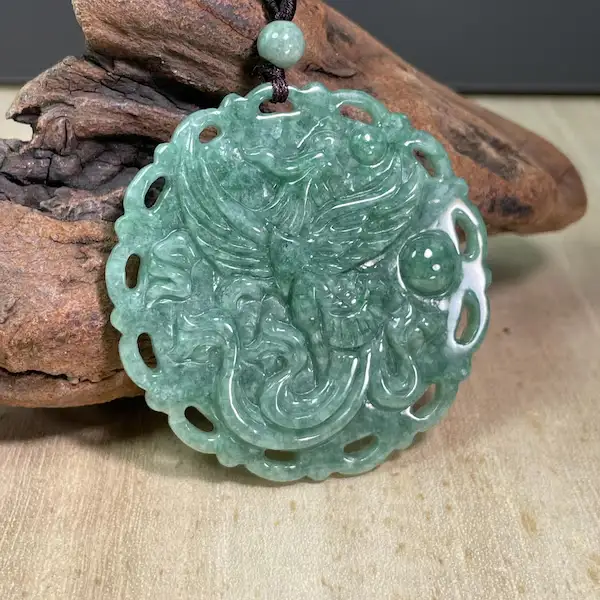
nephrite jade China

gem quality jadeite

Unveiling the Strength of Elegance: The Jade Hardness Scale by Real Jade

A Comprehensive Guide to Jade’s Hardness, Durability, and Authenticity

Jade A grade vs B grade

Understanding the Jade Hardness Scale

The jade hardness scale helps explain how well jade resists scratching, but hardness should not be confused with toughness. On the Mohs scale of jade, jadeite generally measures about 6.5–7, while nephrite is typically around 6–6.5. This difference reflects their mineral composition: jadeite is a pyroxene mineral, whereas nephrite belongs to the amphibole group.

Both varieties offer good jade scratch resistance, but jade is especially valued for its toughness—the ability to withstand impact without easily breaking. This combination of hardness and toughness has made jade suitable for jewelry, ornaments, and detailed carvings for centuries.

Hardness can help when assessing a stone, but it should not be used alone to prove authenticity. A jade durability test may be considered alongside other gemological observations, including specific gravity, refractive index, internal structure, and treatment analysis. Deliberately scratching valuable jade is also not recommended, as even a genuine stone can be damaged.

At Real Jade, professional examination can help distinguish jadeite and nephrite from look-alike materials while assessing their natural characteristics and treatment status.

Exploring Jade Hardness, Toughness, and Scratch Resistance

1. Mohs Hardness and Scratch Resistance

The Mohs scale of jade describes how resistant the mineral is to scratching. Jadeite generally measures about 6.5–7 Mohs, while nephrite is typically around 6–6.5. Both can withstand everyday surface wear, although hardness varies within natural material.

It is important to separate hardness from toughness. Hardness describes resistance to scratches; toughness describes resistance to breaking, chipping, or fracturing. Jade is particularly valued for its toughness, which helps explain its long history in jewelry, carvings, ornaments, and other objects.

2. Hardness of Jadeite and Nephrite

Jadeite and nephrite are the two minerals recognized as jade, but their structures differ. Jadeite is a pyroxene mineral, while nephrite is a type of amphibole aggregate with an interlocking fibrous structure. These differences influence their appearance, texture, carving behavior, and physical properties.

Although jadeite generally has the higher Mohs range, hardness alone does not determine jade quality or value. Color, translucency, texture, clarity, treatment status, size, craftsmanship, and rarity can also influence how a piece is evaluated.

3. How Jade Scratch Resistance Is Tested

A jade durability test should not be reduced to simply scratching the stone with a household object. The Mohs scale compares a mineral’s resistance to scratching, but a casual home scratch test cannot reliably authenticate jade.

For valuable pieces, deliberately creating a scratch is also unnecessary and potentially damaging. Instead, professional examination may combine hardness-related observations with properties such as specific gravity, refractive index, internal structure, mineral identification, and treatment analysis.

4. Testing and Verification

When determining whether a specimen is jadeite, nephrite, or an imitation, testing should consider the material as a whole. Glass, resin, quartz and other look-alike materials may differ in hardness, density, structure, or optical properties.

At Real Jade, examination can be used to assess the natural characteristics of a piece and distinguish jadeite or nephrite from substitute materials. Where appropriate, documentation or gemological certification can provide additional information about identity and treatment.

5. Why Hardness Matters to Collectors and Carvers

Understanding the jade hardness scale helps buyers and collectors interpret scratch resistance and care requirements, but it should never be the only measure of authenticity or value. For carving, hardness is also only one consideration. Toughness, mineral structure, grain, fracture behavior, and the skill of the carver all influence how jade can be shaped and polished.

For anyone learning how to test real jade hardness, the key principle is simple: Mohs hardness provides useful physical information, but professional gemological assessment is more reliable than a destructive home test.

Where Can I Find Natural Jade?

You can explore natural jade at Real Jade, offering carefully selected jade pieces with information about their quality, authenticity, and characteristics to help buyers make informed choices.

Why Does Some Jade Break While Other Jade Doesn't?

Some jade breaks because its internal structure, fractures, inclusions, and treatment affect toughness. Jadeite and nephrite are naturally durable, but impacts, existing cracks, or improper handling can still cause chips or breaks.

What is the hardness of real jade?

Real jade includes two main types: jadeite and nephrite. On the Mohs scale of mineral hardness, jadeite typically ranges from 6.5 to 7, while nephrite ranges from 6 to 6.5. This means jade is relatively hard, durable, and resistant to scratches compared to softer gemstones.

What Grade of Jade Is Most Durable?

Jade’s durability depends more on its type and internal structure than its grade. High-quality jadeite and nephrite with good toughness, fewer fractures, and minimal treatments can withstand everyday wear better.

How Do You Measure Jade Quality and Hardness?

Jade quality is assessed by factors such as color, transparency, texture, and structure, while hardness is measured using the Mohs scale. Jadeite typically measures 6.5–7, while nephrite measures 6–6.5.

How to Protect Jade Jewelry from Damage?

Protect jade jewelry by avoiding hard impacts, harsh chemicals, and sudden temperature changes. Store each piece separately in a soft pouch, and clean it gently with mild soap and lukewarm water.

What Tools Do Jewelers Use to Assess Jade Hardness?

Jewelers may use Mohs hardness test kits, magnification tools, and specialized gemological instruments to assess jade. Professional laboratories can also examine hardness, structure, treatments, and other properties using advanced testing methods.

How Hard Is Jade on the Jade Hardness Scale?

Type of JadeHardness (Mohs Scale)Durability LevelKey Characteristics
Jadeite6.5 – 7HighHarder, more brittle, fine-grained texture
Nephrite6 – 6.5Very high (tougher)Slightly softer but extremely tough
Quartz (Ref)7HighUsed as comparison for scratch resistance
Glass (Ref)5 – 5.5MediumSofter, scratches more easily
Steel (Ref)~5.5MediumCan scratch softer materials

Leave a Reply

Your email address will not be published. Required fields are marked *

Comments

  1. I really enjoyed my experience with Real Jade! I was looking for natural jade and appreciated learning that their jade is untreated, without dyes or resin. The piece I chose was beautiful, and knowing more about its authenticity made me feel comfortable with my purchase. I’d happily recommend Real Jade to anyone in the UAE looking for genuine natural jade.

  2. I purchased a natural jade piece from Real Jade in Dubai and was impressed with the quality and finish. The team explained the jade type and authenticity clearly, making the buying experience smooth and reassuring. A great choice for anyone looking for genuine jade in Dubai.

  3. I’m really happy with the jade I purchased from Real Jade. The piece looks beautiful, feels naturally crafted, and the quality is exactly what I was hoping for. Their service was smooth, helpful, and professional from start to finish.

# Understanding the Jade Hardness Scale The **jade hardness scale** is a useful way to understand how natural jade responds to scratching and everyday wear. Jade is valued for more than its color, translucency, and appearance; its physical structure also contributes to its reputation as a durable gemstone. On the Mohs scale, **jadeite** generally measures about **6.5–7**, while **nephrite** is commonly around **6–6.5**. These numbers describe mineral hardness, meaning resistance to scratching. They do not fully describe a stone's toughness. Toughness refers to how well a material withstands impact, breaking, or chipping. Jade is particularly notable for its toughness because of the structure of its mineral grains and fibers. This combination has made jade suitable for bangles, pendants, beads, carvings, ornaments, and other objects used over long periods. For buyers and collectors, understanding the **jade hardness scale** provides useful physical context. However, hardness should be considered alongside mineral identity, structure, treatment status, condition, and professional gemological observations when evaluating a valuable piece. ## What Is the Jade Hardness Scale? The **jade hardness scale** refers to jade's position on the **Mohs scale of mineral hardness**, a comparative system developed by Friedrich Mohs. The scale ranges from 1 for very soft minerals such as talc to 10 for diamond. It measures whether one material can scratch another; it does not measure overall durability, impact resistance, or value. Jade does not have a separate hardness scale created specifically for gemstones. Instead, jadeite and nephrite are assigned approximate positions within the standard Mohs system. Jadeite generally falls between 6.5 and 7, while nephrite is generally around 6–6.5. This distinction matters because the ranges can overlap. A Mohs result by itself cannot establish whether an unknown stone is jadeite or nephrite, and it cannot prove that the material is natural jade. Natural stones can also show variation because of mineral composition, texture, surface condition, inclusions, and testing conditions. The **Mohs scale of jade** should therefore be treated as one physical characteristic rather than a standalone authentication method. ## Mohs Scale of Jade: Jadeite vs. Nephrite When comparing the **Mohs scale of jade**, jadeite is usually positioned slightly higher than nephrite. Jadeite is a pyroxene mineral, whereas nephrite is an amphibole material characterized by an interlocking fibrous structure. Their different mineral structures help explain differences in texture, appearance, carving behavior, and physical properties. | Jade variety | Typical Mohs range | Mineral group | Key physical consideration | | ------------ | -----------------: | ------------- | ------------------------------- | | Jadeite | 6.5–7 | Pyroxene | Generally slightly harder | | Nephrite | 6–6.5 | Amphibole | Noted for exceptional toughness | The difference between 6 and 7 on the Mohs scale should not be interpreted as a simple measure of which jade is “better.” Jadeite is often more commercially valuable because of factors such as color, translucency, texture, quality, rarity, and treatment status—not simply because it can measure slightly harder. Nephrite has also had an important historical role in carving, ornaments, tools, and jewelry. Its toughness and fibrous structure can make it highly resistant to certain types of impact despite its slightly lower Mohs hardness. ## Understanding the Hardness of Jadeite and Nephrite The **hardness of jadeite and nephrite** is only one part of their physical identity. Jadeite can occur in green, lavender, white, yellow, orange, and other colors, while nephrite is commonly found in green, white, gray, and related tones. Color alone does not establish mineral identity or authenticity. The hardness of jadeite and nephrite can also vary within natural specimens. Surface alteration, weathering, inclusions, texture, treatments, and the exact area being examined can influence observations. This is why professional gemological identification normally considers several characteristics together. A proper examination may assess: * Mohs hardness or scratch resistance * specific gravity * refractive index or other optical properties * microscopic structure * mineral composition * transparency and texture * evidence of dye, impregnation, bleaching, or other treatments The **jade hardness scale** is therefore best understood as part of a broader physical profile. It can help explain how a piece behaves, but it does not independently identify the material. ## Hardness vs. Toughness: Why the Difference Matters One of the most important concepts when studying jade is the difference between **hardness and toughness**. **Hardness** describes resistance to scratching. **Toughness** describes resistance to breaking, chipping, or fracturing. A gemstone can be relatively hard but comparatively brittle, while another material can have lower hardness but greater toughness. Jade's reputation comes significantly from its toughness. Its interlocking mineral structure can help distribute mechanical stress through the material. This property is particularly relevant to carved objects and bangles, where resistance to impact can be important. The **jade hardness scale** therefore should not be used as a complete durability ranking. A jade bangle, for example, may resist ordinary impact because of its toughness, but an existing fracture, drilled opening, thin section, or sharp impact can still create damage. This distinction also makes the content more useful for buyers: **hardness helps explain scratch resistance; toughness helps explain impact resistance.** ## Jade Durability Test: What Does It Show? A **jade durability test** should be understood as a broader evaluation rather than simply scratching the stone. Hardness testing focuses primarily on surface scratching, while durability can involve surface condition, toughness, fractures, structure, and susceptibility to damage. A casual home experiment with a knife, coin, glass fragment, or another household object is not a dependable authentication procedure. The material being used may have an uncertain hardness, and pressure or contamination can affect the result. More importantly, deliberately scratching valuable jade can leave permanent marks. A controlled examination can compare a specimen with materials of known hardness, but the result should be interpreted alongside other gemological evidence. A stone that resists a scratch is not automatically natural jade. For expensive jadeite, collectible carvings, or valuable jewelry, a professional examination is preferable. A qualified gemologist or appropriate testing laboratory can select non-destructive or controlled methods according to the specimen. ## How to Test Real Jade Hardness People often search for **how to test real jade hardness** before purchasing a stone or checking an inherited piece. The safest approach is not to begin with a destructive scratch test. Start with a visual examination of the stone's polish, luster, translucency, texture, color distribution, and visible inclusions. These observations can provide useful clues but cannot independently establish that the material is jade. A controlled hardness assessment can then provide information about scratch resistance. The **jade hardness scale** gives the examiner a comparative reference, with jadeite generally around 6.5–7 and nephrite around 6–6.5. However, this measurement should be combined with properties such as density, optical behavior, microscopic structure, and mineral identification. This is especially important because imitation materials can sometimes have similar scratch resistance. Glass, quartz-based materials, resin composites, and other substitutes may produce misleading results when tested informally. For that reason, **how to test real jade hardness** should not be reduced to “scratch the stone and see what happens.” A professional assessment provides substantially more useful information while reducing the possibility of damaging the piece. ## Jade Scratch Resistance in Everyday Use **Jade scratch resistance** is one reason properly cared-for jade jewelry can retain its polished appearance over time. However, jade is not scratch-proof. Materials that are harder on the Mohs scale can mark its surface, particularly when they come into repeated contact. Diamonds and sapphires, for example, are substantially harder than jade. Loose sand and dust can also contain hard mineral particles capable of creating fine abrasions. Rings may be particularly exposed because they frequently contact surfaces during everyday activities. The **jade hardness scale** helps explain this behavior. A Mohs number represents relative scratch resistance; it does not mean that a stone is immune to damage. To preserve **jade scratch resistance**, avoid storing jade jewelry directly against harder gemstones. Individual pouches, soft-lined compartments, or separate sections of a jewelry box can reduce unwanted contact. ## Why Jade Is Considered Durable Jade's durability cannot be explained by hardness alone. Its exceptional toughness is a major part of its physical reputation. In both jadeite and nephrite, mineral structure influences how force moves through the material. This helps explain why jade has been used historically for objects that require substantial resistance to impact and wear. Nephrite's interlocking fibrous structure is particularly associated with its toughness, while jadeite combines useful hardness with substantial toughness. Nevertheless, no natural gemstone is indestructible. Existing fractures, inclusions, thin edges, drilled areas, mounting pressure, and severe impacts can increase the risk of damage. For buyers, the most useful interpretation is therefore: **Hardness = resistance to scratching.** **Toughness = resistance to breaking or chipping.** **Durability = the broader ability to withstand expected use.** This distinction gives the **jade hardness scale** a more accurate role in gemstone education. ## Testing Jade for Authenticity Hardness can contribute to an authenticity assessment, but it should never be presented as conclusive proof. Some imitation materials may have comparable hardness, while treated, composite, or assembled materials can complicate interpretation. Professional identification may consider the **Mohs scale of jade** together with specific gravity, optical properties, microscopic examination, mineral structure, color distribution, and treatment indicators. For higher-value material, laboratory documentation can provide additional evidence about identity and treatment. When buying natural jade, useful questions include: * Is the material jadeite or nephrite? * Is the piece natural or treated? * Are treatments disclosed? * Is supporting gemological documentation available? * Are there visible fractures, repairs, or chips? * Does the description clearly distinguish the stone from imitation material? These questions provide more meaningful information than relying on a single scratch test. ## Jade Durability Test for Jewelry Jewelry presents different durability requirements depending on its design and use. A **jade durability test** for a bangle may need to consider impact and existing fractures, while a pendant may experience more movement and surface friction. Rings can receive frequent knocks because they are exposed during everyday activities. The **jade hardness scale** helps explain surface performance, while toughness provides additional context for impact resistance. Both characteristics should be considered when selecting and caring for jewelry. A professional inspection can be particularly useful for frequently worn bangles and rings. Small fractures or chips may deserve attention before continued wear increases the possibility of further damage. ## How to Protect Jade From Scratches Understanding **jade scratch resistance** makes everyday care easier. Store jade separately from diamonds, sapphires, and other harder gemstones. Avoid placing multiple pieces together where repeated movement can create abrasion. For routine cleaning, a soft cloth and mild soapy water may be suitable for many untreated jade pieces. Rinse carefully and dry with a soft cloth. Avoid abrasive cleaners, rough brushes, and harsh chemicals, particularly when the piece has a known treatment or an unknown surface coating. Care requirements can vary according to treatment and mounting. If a valuable piece has documentation or specific care instructions, those recommendations should take priority. The **jade hardness scale** explains why preventive storage matters: even a durable gemstone can develop scratches through repeated contact with harder materials. ## Real Jade and Professional Verification For buyers seeking natural jade, professional verification is more informative than an informal hardness experiment. A qualified specialist can assess the stone's physical and optical characteristics and determine whether additional laboratory analysis is appropriate. At **Real Jade**, information about the jade hardness scale can form part of a broader explanation of gemstone characteristics, durability, and identification. Buyers should consider the complete condition of a piece, including its polish, fractures, mounting, treatment history, and available documentation. For expensive jadeite, collectible carvings, and fine jewelry, transparent information about material identity and treatment is particularly valuable. A professional report, when available and appropriate, can give buyers a clearer basis for understanding what they are purchasing. ## Jade Hardness Scale and Long-Term Care The **jade hardness scale** gives owners a practical reference for understanding scratch resistance, but long-term care depends on more than a Mohs number. Avoid unnecessary impact, keep jade away from harder gemstones, and inspect frequently worn pieces for visible changes. Bangles and rings deserve particular attention because they can encounter repeated impact. If a crack, chip, loose setting, or unusual surface change appears, professional inspection is preferable to continuing normal wear without assessment. Understanding both hardness and toughness allows owners to make better decisions about storage, cleaning, handling, and use. ## Conclusion The **jade hardness scale** provides a useful starting point for understanding the physical behavior of jade. Jadeite generally measures around **6.5–7 on the Mohs scale**, while nephrite commonly measures around **6–6.5**. These values describe scratch resistance, not overall gemstone quality or durability. The **Mohs scale of jade** should therefore be considered alongside toughness, mineral structure, treatment status, and condition. Understanding the **hardness of jadeite and nephrite** helps explain differences between the two jade varieties without suggesting that hardness alone determines value or authenticity. A **jade durability test** should consider more than scratching, while **how to test real jade hardness** should be approached cautiously to avoid damaging valuable material. **Jade scratch resistance** is useful for everyday wear, but no jade should be considered completely scratch-proof. For buyers and collectors, the most reliable approach combines physical characteristics with professional gemological examination and transparent documentation. At **Real Jade**, this broader perspective can help customers understand jadeite and nephrite beyond appearance alone and make more informed decisions about authenticity, condition, treatment, care, and long-term ownership. Hardness of Jadeite and Nephrite The hardness of jadeite and nephrite differs slightly because they have different mineral compositions. Jadeite is a pyroxene mineral, whereas nephrite is an amphibole mineral. Nephrite is particularly known for its exceptional toughness, which helps it resist breaking under impact. How to Test Real Jade Hardness Understanding how to test real jade hardness requires caution. Although jade can resist scratches from many common materials, a scratch test may damage the stone or its polish. Professional gemological testing is a safer way to identify genuine jadeite and nephrite. Jade Scratch Resistance Jade scratch resistance refers to its ability to withstand surface scratches, not its resistance to cracking or breaking. Glass and other minerals may have different hardness levels, so scratch tests alone cannot reliably confirm authenticity. For accurate identification, consult a qualified gemologist who can examine the stone using appropriate testing methods.

Let's Chat!